Ten Films, One City: An HD Walking Tour of Istanbul From Your Couch
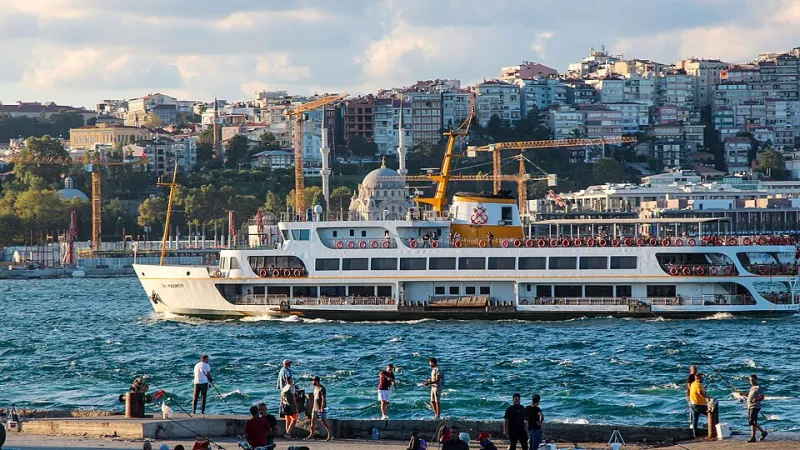
Photo: SegLig, CC BY 4.0, via Wikimedia Commons
Istanbul is one of those cities that punishes a two-day visit. You land, you see the postcard stuff, you eat well, you leave, and you have somehow missed the entire texture of the place — the back streets, the water, the way the light goes amber over the Golden Horn at 5 p.m. in November.
So here is a cheaper option. Ten Turkish films, all set in or around Istanbul, that function as a self-guided tour if you watch them the right way. Some are art-house landmarks, some are genre junk food, one is a documentary that will make you angry. Together they cover roughly sixty years of a city that never stops knocking itself down and rebuilding.
A note on method: watch these with the subtitles on, the lights off, and a map open on your phone. Pause on the wide shots. That is where the city actually lives.
Uzak (Distant, 2002) — Beyoğlu under snow
Nuri Bilge Ceylan's breakthrough follows a photographer hiding out in his Istanbul apartment while his cousin from the countryside sleeps on his floor. Plot-wise, almost nothing happens. Location-wise, it is a gift: Galata alleys, a snowbound Taksim, ferries grinding through grey water, and the particular loneliness of a city apartment in winter.
Where HD pays off: the snow. Ceylan shoots silence, and a good transfer lets you see individual flakes against a dark window instead of a smear of white noise. The Criterion edition is the reference version — long takes, no crush in the shadows.
Crossing the Bridge: The Sound of Istanbul (2005) — the city as a mixtape
Fatih Akın's documentary is the single best two-hour primer on Istanbul's sound, from street buskers to arabesque legends to underground rock in a Beyoğlu basement. It also doubles as a ferry tour of the Bosphorus, shot with an affection that borders on showing off.
Where HD pays off: the performance footage. Close mics and close framing on musicians' hands — a good transfer keeps the grain of skin and instrument without turning faces waxy.
Viewing tip: watch this one first. It gives you the city's mood before you get the plot of anything else.
Ağır Roman (Cholera Street, 1997) — Tarlabaşı before the bulldozers
Adapted from Metin Kaçan's novel, this is a loud, grimy, oddly tender portrait of Tarlabaşı when it was a working-class neighborhood of migrants, musicians, and small-time crooks. Large chunks of what you see on screen no longer exists — the district has been gutted and rebuilt since.
Where HD pays off: neon, wet pavement, crowded interiors. This film is a document of a place that got demolished, and every extra bit of resolution is archival value.
Tabutta Rövaşata (Somersault in a Coffin, 1996) — Karaköy and the art of loitering
Derviş Zaim's debut follows a homeless man who sleeps in stolen cars and drifts around Galata and Karaköy. It is funny, then it is not. As a walking tour it is unbeatable: steep streets, harbor air, shopkeepers, tea glasses, the whole street-level economy of the old city.
Gemide (On Board, 1998) — the docks at night
Five sailors stuck on a boat in the harbor, one bad decision, and a long night. The location work around the Karaköy and Tophane waterfront is superb — wet rope, container cranes, the black water between hulls.
Where HD pays off: black levels. Half this movie happens in near-darkness, and on a weak stream it turns into a grey mush. On a proper transfer you can read the whole deck.
Hamam (Steam: The Turkish Bath, 1997) — Fatih, rooftops, and steam
Ferzan Özpetek's story of an Italian man inheriting a crumbling hamam in Istanbul is the most postcard-friendly entry on this list, and that is fine. The bathhouse interiors, the rooftop views over the old city, and the slow domestic rhythm of a Fatih apartment building are all gorgeously framed.
Viewing tip: the steam scenes are a compression stress test. If the picture blocks up and pixelates in the fog, your stream is cheap. Try a different source.
Masumiyet (Innocence, 1997) — the long stare
Zeki Demirkubuz's minimalist drama moves through Istanbul's back streets and waterfront with almost no interest in tourism and total interest in faces. It is a hard watch — two hours of people failing to say the thing they mean — but it captures the city's emotional weather better than any travel ad.
Where HD pays off: faces in medium close-up, which is basically the entire film. Grain structure matters here; over-sharpened streams make it look cheap when it is anything but.
Ekümenopolis: Ucu Olmayan Şehir (2011) — the city that ate itself
Imre Azem's documentary about Istanbul's mega-projects — highways, third bridge, mega-malls, mass demolition — is the antidote to every pretty skyline shot in this list. It explains why the city looks the way it does in 2026, and it was filmed just before the park protests made its arguments mainstream.
Viewing tip: pair it with Ağır Roman. One shows the neighborhood, the other explains where it went.
Gurbet Kuşları (Birds of Exile, 1964) — Yeşilçam's Istanbul
Halit Refiğ's classic follows a family arriving from the countryside into a city that has no room for them: factory gates, rented rooms, and the first gecekondu settlements on the edges. It is the oldest film here and the most historically valuable.
Fair warning: the HD situation is uneven. Some circulating masters are soft and scratched. If you find a clean, well-graded version, treasure it — you are looking at Istanbul before the population explosion finished the job.
Organize İşler (2005) — the hustle
A broad, fast comedy about small-time grifters, and a sneaky-good tour of modern Istanbul: Bosphorus mansions, business districts, back offices, and traffic. Watch it last. After nine films of melancholy and urban theory, you will want something that treats the city as a playground.
How to build your own double bill
Three pairings that work well:
- The mood first: Crossing the Bridge, then Uzak. Sound of the city, then silence of the city.
- The history arc: Gurbet Kuşları, then Ağır Roman, then Ekümenopolis. Arrival, neighborhood, demolition.
- The waterfront night: Gemide, then Tabutta Rövaşata. Both are about men with nowhere to be, both are 90 minutes, both look great with the volume up.
Before you book the flight
Armchair travel only gets you so far, but it is genuinely useful prep. Keep a note of the neighborhoods that keep showing up — Beyoğlu, Galata, Karaköy, Fatih, Tarlabaşı — and you will notice they cluster along the water. When you do go, walk that line. Start at Karaköy, climb to Galata, cut across to Tarlabaşı, end in Fatih. You will have walked through four of these films in an afternoon.
And if you never go? Still worth it. A city this layered is worth knowing even at 1080p.