Where the Good Transfers Live: A 2026 Streaming Map for Turkish Cinema in the US

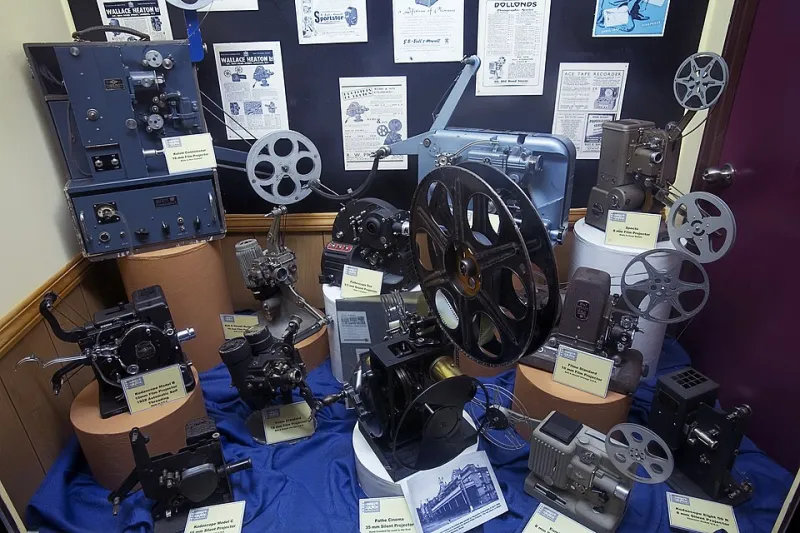
Photo: Brendan Crain, Public domain, via Wikimedia Commons
There is a specific kind of disappointment that comes from settling in for a Turkish film you have been meaning to watch for years, pressing play, and discovering that the image looks like a wet photocopy and the subtitles read like they were processed through three languages and a blender.
That is not a niche complaint. For US viewers, Turkish cinema in 2026 is spread across roughly a dozen services, and the gap between the best and worst version of the same movie is enormous. The good news is that the gap is predictable. Once you know which shelves are curated and which are warehouses, you can stop gambling.
Start with the two curated houses
The Criterion Channel is the closest thing to a guarantee. The Ceylan catalog alone — Distant, Climates, Once Upon a Time in Anatolia, Winter Sleep — arrives with supervised transfers, sensible aspect ratios, and subtitles that were made by humans who watched the film. If your interest is slow, serious, beautifully photographed Turkish drama, this is where your subscription money should go.
MUBI is the other reliable one. Rotating Turkish focus programs, restored classics, and new festival titles that never get a US theatrical run. The catch is the model: what you want may vanish next month. MUBI is a theater, not a library — treat it accordingly and keep a watchlist you actually check.
Both platforms share the quality that matters most here: someone made a decision. A human chose the master, the framing, the translation. That is rarer than it should be.
The big services: hit or miss
Netflix carries a decent volume of Turkish titles, heavy on recent commercial films and originals. The image is generally clean and modern because the source is modern — these are digital productions, not scans of 35mm. Subtitles are usually professional. The weakness is depth: the catalog skews new, so you will not find much from the 1990s or earlier, and licensing churn means titles appear and disappear with little warning.
Prime Video is the messiest of the majors, and also occasionally the most surprising. Prime proper has a modest selection; the real action is in the add-on channels and rental store, where older Turkish films surface in transfers of wildly varying quality. Rentals are often the only legal way to see something specific, so budget for it.
Max has thinner Turkish holdings overall and is worth checking rather than subscribing for. Search first, decide second.
Free, ad-supported, and weirdly useful
The FAST services — Tubi, Pluto TV, Plex — are where a lot of people first stumble into Turkish genre cinema, and honestly, good for them. The trade-off is obvious. Ad breaks land mid-scene, the bitrate dips, and you will occasionally get a subtitle track that appears to have been auto-generated and then abandoned.
But: free is free, and the deep cuts are real. If you want to sample 1970s melodrama or a random 1980s comedy without committing, this is the low-risk entry point. Just adjust expectations from 'cinema' to 'late-night cable,' and you will have a fine time.
YouTube deserves its own line. There are legitimate, rights-holding channels — including broadcaster archives — posting full Turkish films in surprisingly decent HD with subtitle options. There are also uploads that look like they were recorded off a VHS with a camcorder pointed at a television. Learn to tell them apart within the first thirty seconds and YouTube becomes one of the most useful free resources available.
Your library card is an underrated film festival
Kanopy and Hoopla, available through US public libraries, both carry world cinema that the major services ignore. Selection varies enormously by library system, and Kanopy's credit model means you should spend your monthly allotment deliberately. But the transfers are usually sourced from distributors rather than scraped, and the subtitles are clean. Check what your card gets you before you pay for anything.
Discs are still the ceiling
The honest answer for image quality is that a good Blu-ray still beats a good stream. Criterion's physical editions of the Ceylan films are the benchmark, and boutique labels continue to license Turkish titles in limited runs. The caveat for US buyers: watch the region coding. A lot of excellent Turkish cinema on disc comes from UK and European labels locked to Region B. Unless you have a region-free player, read the fine print before you import.
How to grade a transfer in ninety seconds
You do not need a calibration disc. Try this:
- Find a dark scene. Look at the shadows. If they are a solid, blocky black with visible squares crawling around, the stream is starving.
- Find a wide shot with movement. Panning across a skyline or a crowd is where low bitrates fall apart. Watch for smearing.
- Find a face in close-up. Over-sharpened masters add a crunchy white halo around hairlines. That is not detail; that is processing.
- Read three subtitle lines. Are names spelled consistently? Is the grammar native-sounding? Burned-in subtitles that cannot be turned off are a warning sign about the whole master.
- Check the aspect ratio. If a widescreen film is playing in a stretched or cropped frame, stop immediately.
The short version
- You want the classics done right: Criterion Channel first, physical discs second.
- You want discovery and new voices: MUBI, with a watchlist you actually maintain.
- You want volume and modern releases: Netflix, accepting that older films are largely absent.
- You want to sample free: Tubi and YouTube, with low expectations and a quick quality check.
- You want something specific and obscure: library services and rentals, in that order.
The real takeaway is that Turkish cinema in the US is not hard to find in 2026. It is hard to find well presented. Choose the shelf, not just the title, and you will spend a lot less time squinting.